
How to Learn German as a Beginner: A Realistic Plan to Reach A1
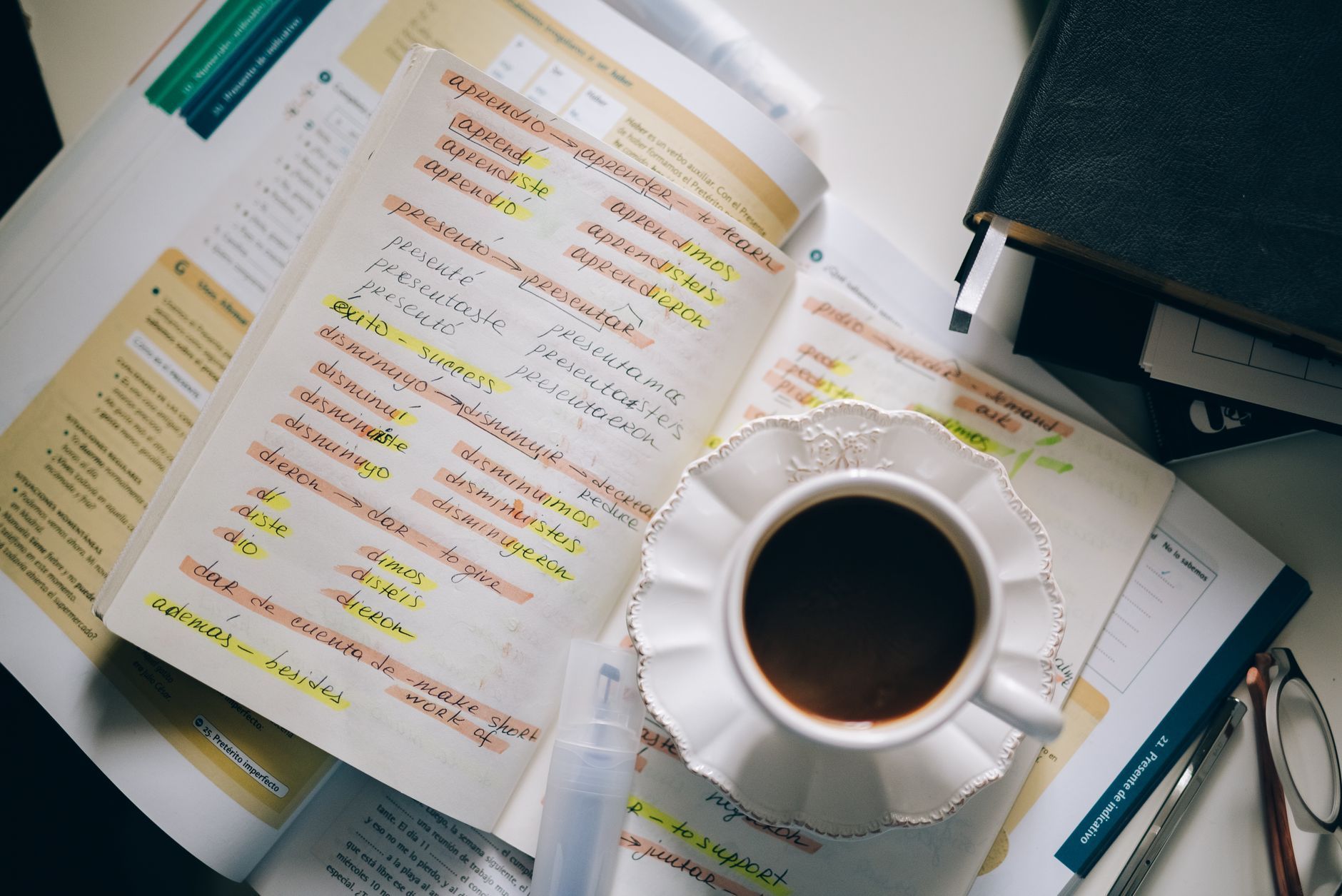
Reaching A1 German is a realistic goal for a busy adult. You do not need a gift for languages or a year off work. You need a clear target, a steady daily routine of about an hour, and enough speaking practice to get over the fear of opening your mouth. This guide explains what A1 really means, which parts of German trip beginners up, and how to organise 12 weeks of study.
What "A1" Actually Means
A1 is the first level of the Common European Framework of Reference for Languages (CEFR), which runs from A1 and A2 (basic user) through B1 and B2 (independent user) to C1 and C2 (proficient user). At A1, you can:
- Understand and use familiar everyday expressions and very basic phrases
- Introduce yourself and others, and ask and answer simple questions about where you live, people you know and things you have
- Interact in a simple way, provided the other person speaks slowly and clearly and is willing to help
In practical terms, an A1 learner can order food, ask for directions, fill in a simple form with personal details, talk about family and work in short sentences, and understand slow, simple announcements. It is a foundation, not fluency. That is good news: the target is achievable, and every hour you invest shows up quickly in what you can do.
Why People Start Learning German
Motivation matters, because it determines what you practise. Common reasons include:
- Studying in Germany. Many master's programmes are taught in English, but daily life, part-time jobs and integration are much easier with German. Some programmes taught in German require higher levels such as B2 or C1.
- Working in Germany. Nursing, skilled trades, engineering and IT are fields where professionals from Pakistan and elsewhere look for opportunities. Requirements vary by profession and visa route, and regulated professions such as nursing usually require higher levels than A1.
- Family reunification. Spouses joining a partner in Germany are often asked to show basic German, typically at A1, though there are exceptions. Always confirm the current requirement with the German embassy or consulate responsible for your country.
- Career growth. A second European language stands out on a CV.
If you have a visa-related goal, write down the exact level and the accepted certificates now, so your plan ends with the right exam.
The Building Blocks of A1 German
Pronunciation: easier than it looks
German spelling is far more consistent than English. Once you learn a handful of rules, you can pronounce most words you read. Focus on these early:
- Umlauts: ä, ö and ü change the vowel sound. schon (already) and schön (beautiful) are different words.
- ei and ie: "ei" sounds like the English word "eye" (mein), while "ie" sounds like "ee" (Liebe). Say the second letter in English and you will usually be right.
- w and v: "w" sounds like English "v" (Wasser), and "v" often sounds like "f" (Vater).
- z: sounds like "ts" (Zeit).
- sp and st at the start of a word: "shp" and "sht" (sprechen, Straße).
- ch: a soft sound after e and i (ich) and a throatier sound after a, o and u (Buch). Urdu speakers often find the second one familiar, as it is close to the sound of the letter خ in khabar.
Nouns, genders and articles
Every German noun has a grammatical gender: masculine (der), feminine (die) or neuter (das). All nouns are also written with a capital letter. If you speak Urdu, the idea of nouns having gender will not be new, though German adds a third gender and the genders do not match Urdu's.
The single most useful habit: never learn a noun without its article. Learn der Tisch, die Lampe, das Buch, not just "Tisch". Some learners colour-code their flashcards by gender, which helps the memory. A few patterns help too, for example nouns ending in -ung, -heit and -keit are feminine, and diminutives ending in -chen are neuter.
Core grammar for A1
You do not need all of German grammar to reach A1. The essentials are:
- Personal pronouns and verb endings in the present tense: ich wohne, du wohnst, er wohnt, wir wohnen.
- The two key irregular verbs: sein (to be) and haben (to have).
- Verb in second position: in a normal statement, the conjugated verb comes second. Heute arbeite ich. (Today I work.)
- Questions: W-questions (Wo wohnst du?) and yes/no questions with the verb first (Wohnst du in Lahore?).
- Nominative and accusative cases: enough to say Ich habe einen Bruder (I have a brother).
- Negation: nicht and kein.
- Modal verbs: können, müssen, möchten, which push the main verb to the end. Ich möchte einen Kaffee trinken.
- Separable verbs: aufstehen becomes Ich stehe um 7 Uhr auf.
- Formal and informal "you": Sie for strangers, officials and colleagues; du for friends and family.
Vocabulary: How to Remember Words That Stick
A1 vocabulary is usually estimated at several hundred words, centred on everyday themes. Rather than chasing a number, cover the topics that A1 exams and daily life actually use: greetings, numbers, time and dates, family, food and drink, shopping, the home, work, transport, the body and health, and the weather.
- Use spaced repetition. Flashcard apps that show words just before you forget them are far more efficient than rereading lists.
- Learn words in phrases. "Ich hätte gern..." (I would like...) is more useful than the separate words.
- Make it personal. Learn the words for your own job, city and family first. You will use them in every conversation.
- Label your surroundings. Sticky notes on the fridge, door and kettle, complete with articles, create daily reminders.
- Say words out loud. Reading silently does not train your mouth or your ears.
A Daily Routine That Fits Around Work
Consistency beats intensity. Five 60-minute sessions a week will take you further than a single five-hour weekend binge. A simple daily structure:
- 10 minutes: flashcard review (do this on your commute or lunch break)
- 20 minutes: new grammar or a lesson from a structured course, such as the beginner German course for Level A1
- 15 minutes: listening, such as slow-German podcasts or beginner video lessons, ideally with a transcript
- 15 minutes: speaking or writing: describe your day aloud, write five sentences, or practise with a partner
At the weekend, add one longer session to revise the week and do a mock exam task.
Speaking Practice When You Have No German Friends
Many learners can read A1 texts but freeze when they need to speak. Plan speaking from week one:
- Shadowing: play a short audio clip, pause and repeat it exactly, copying the rhythm and sounds.
- Self-talk: narrate what you are doing in simple German while cooking or getting ready.
- Record yourself introducing yourself, then compare with a native recording.
- Live classes or tutors: a teacher can correct mistakes before they become habits, and group classes give you regular, low-pressure conversation.
- AI chatbots: useful for practising simple dialogues, but they can make mistakes. Check doubtful grammar against your course. Our guide to prompt engineering basics explains how to ask for slow, A1-level conversation practice and corrections.
Nervousness about speaking is normal. Many of the techniques in our guide to overcoming the fear of public speaking, such as preparation, slow breathing and frequent short practice, work just as well in a language class.
A 12-Week Plan to Reach A1
This plan assumes about an hour a day, five or six days a week. If you can study more, you may finish sooner; if you have less time, simply stretch each phase.
Weeks 1 to 3: Sounds, greetings and yourself
- Alphabet, pronunciation rules, numbers 0 to 100
- Greetings, introducing yourself, countries, languages and jobs
- sein, haben and regular present-tense verbs; W-questions
- Goal: introduce yourself in 6 to 8 sentences without notes
Weeks 4 to 6: Daily life
- Family, the home, food and drink, shopping and prices
- Articles and genders, accusative case, kein and nicht
- Telling the time, days of the week, daily routine, separable verbs
- Goal: describe your daily routine and order a meal in a role-play
Weeks 7 to 9: Getting around and dealing with tasks
- Transport, directions, appointments, the doctor, the weather
- Modal verbs, imperative for simple instructions, prepositions of place and time
- Write short messages: an email to cancel an appointment or invite a friend
- Goal: understand a simple announcement and write a 30 to 40 word message
Weeks 10 to 12: Exam preparation
- Work through official sample papers for your chosen exam
- Practise each part under timed conditions: listening, reading, writing and speaking
- Revise your weakest vocabulary topics and common grammar mistakes
- Goal: complete a full mock exam and be comfortable with the speaking format
A1 Exam Options
If you need a certificate, the widely recognised choices include:
- Goethe-Zertifikat A1: Start Deutsch 1, offered by the Goethe-Institut and its partners. It tests listening, reading, writing and speaking, and the speaking part is usually done in a small group. See the official Goethe-Institut website for model papers and exam centres.
- telc Deutsch A1, offered through telc-licensed exam centres. Details are on the telc website.
- ÖSD Zertifikat A1, from the Austrian German language diploma system, available in some countries.
Which certificate is accepted depends on who is asking for it, so check with the embassy, university or employer first. Exam formats, fees and seat availability change, and in some cities demand for A1 exam slots is high, so register early and confirm the details on the provider's website.
Frequently Asked Questions
How long does it take to reach A1 German?
It depends on your study time and experience with other languages. With about an hour of focused study most days, many adults can reach A1 in around three months, which is why this guide uses a 12-week plan.
Can I learn German on my own?
You can cover a lot alone with a good course, audio and flashcards. Most learners still benefit from a teacher or class for speaking practice and feedback, especially before an exam.
Is German grammar too difficult for beginners?
German has more grammar than English, but at A1 you only need the essentials listed above. Learning articles with every noun from day one removes much of the difficulty later.
Is A1 enough to work in Germany?
Usually not on its own. A1 helps with daily life and some visa routes, but many jobs and regulated professions require B1, B2 or higher. Treat A1 as the first milestone.
Should I learn German and prepare for IELTS at the same time?
It is possible if you are organised, but it is demanding. If you need both, decide which exam comes first. Our IELTS preparation guide can help you plan the English side.
Next Steps
Pick your goal, block an hour a day in your calendar, and start with pronunciation and self-introduction this week. If you would like structured lessons and guided speaking practice, the Talk Like a Native German A1 course takes you through the A1 essentials step by step, and the GML-101 German Language Master Course (Level A1) offers interactive classes with real-world discussion. Either is a solid starting point for your first certificate.