
What Is Artificial Intelligence? (A Clear, Practical Guide for Beginners)
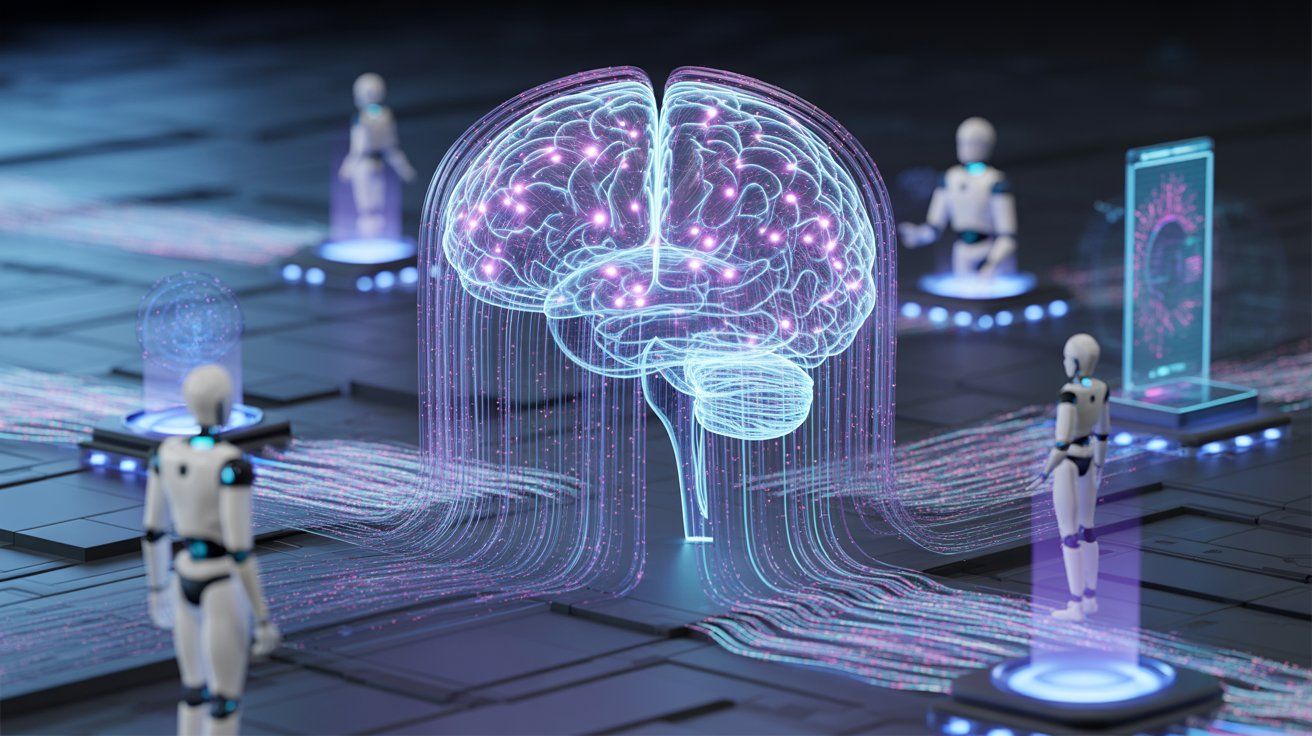
"What Is Artificial Intelligence" has become an evergreen phrase today. You encounter it everywhere from apps, smartphones to cars. But most people are baffled. To them, it appears difficult and technical. The truth is that it isn’t as complicated as they imagine. All Artificial Intelligence means is making machines capable of learning and decision-making through data.
What Is Artificial Intelligence? (A Clear, Practical Guide for Beginners) Artificial intelligence is something that you have been using for quite some time now without even knowing about it. The process that makes search on the internet more precise and video watching a pleasant experience involves artificial intelligence. This is just one example of artificial intelligence usage. You can learn much more from this guide.
What Is Artificial Intelligence (Simple Meaning Explained)
Artificial Intelligence, often called AI, means machines that can perform tasks that usually need human thinking. These tasks include learning, problem-solving, and decision-making. You do not need to imagine robots with emotions. AI is mostly software that processes data and finds patterns.
Think of AI like a smart assistant. It learns from past information and improves over time. For example, when you type a message and your phone suggests the next word, that is AI in action. It studies your typing habits and predicts what you might say next.
Brief History of Artificial Intelligence (Only What Matters)
AI did not appear suddenly. It started as an idea many years ago. In the 1950s, scientists began exploring if machines could think. Early progress was slow because computers were not powerful enough.
Later, progress stopped for a while. This period is called the “AI winter.” Then things changed. With better computers and more data, AI improved quickly. Around 2012, deep learning made a big breakthrough. Machines became much better at recognizing images and speech.
How Artificial Intelligence Works (Core Idea Made Simple)
AI works by learning from data. It looks at examples, finds patterns, and makes predictions. First, you give it data. Then it learns from that data. After that, it uses what it learned to make decisions.
Imagine teaching a child to recognize animals. You show many pictures of cats and dogs. Over time, the child learns the difference. AI works in a similar way. It does not “think” like a human. It simply finds patterns in large amounts of data.
Basic AI Process
Types of Artificial Intelligence (What Exists Today)
There are different types of AI. The most common one today is narrow AI. This type focuses on one task. For example, a voice assistant can answer questions but cannot drive a car.
General AI is a concept. It would think like a human and handle many tasks. However, it does not exist yet. Super AI is only theoretical. It would be smarter than humans, but it is still just an idea.
Key Branches of Artificial Intelligence
AI has several important branches. Each one focuses on a specific task. Machine learning helps systems learn from data. Natural language processing helps machines understand human language. Computer vision allows machines to see and understand images. Robotics combines AI with physical machines.
These branches work together in many systems. For example, a self-driving car uses computer vision to see the road and machine learning to make decisions.
Real-Life Examples of Artificial Intelligence
AI is already part of your daily life. You may not notice it, but it is everywhere. Search engines use AI to show results. Streaming platforms suggest movies based on your history.
Banks use AI to detect fraud. Hospitals use AI to help diagnose diseases. Even your phone’s face unlock feature uses AI. These examples show how useful and common AI has become.
Where AI Is Used
Benefits of Artificial Intelligence
AI offers many benefits. It saves time and improves efficiency. It can process large amounts of data quickly. This helps businesses make better decisions.
AI also reduces human error. For example, it can analyze medical scans more accurately in some cases. It also automates repetitive tasks, which allows people to focus on more creative work.
Limitations and Challenges of AI
AI is powerful, but it has limits. It depends on data. If the data is poor, the results will also be poor. This is called “garbage in, garbage out.”
AI also lacks true understanding. It cannot think or feel like humans. Privacy is another concern. Many systems collect personal data, which can create risks if not handled properly.
Common Misconceptions About Artificial Intelligence
Many people believe AI can think like humans. That is not true. AI does not have emotions or awareness. It only follows patterns and rules.
Another myth is that AI will replace all jobs. In reality, AI changes jobs more than it replaces them. It creates new roles while automating repetitive tasks.
How AI Is Changing Jobs and Skills
AI is changing the job market. Some tasks are now automated. This means fewer manual jobs. However, new jobs are also being created.
People now need digital skills. Understanding AI can give you an advantage. Many jobs now involve working with AI tools instead of competing against them.
Future of Artificial Intelligence (Realistic View)
The future of AI looks promising, but not extreme. AI will continue to improve slowly. It will become more useful in everyday life.
However, it will not suddenly take over the world. Most progress will focus on helping humans. AI will become a tool that supports decision-making and productivity.
How Beginners Can Start Learning AI
Starting with AI is easier than you think. You do not need advanced knowledge at the beginning. You can start with basic concepts.
Learning programming, especially Python, can help. You can also use online platforms to practice. Start small and build your understanding step by step.
Quick Summary of Artificial Intelligence
AI is about machines learning from data. It focuses on patterns and predictions. Most AI today is narrow and task-specific.
It helps improve efficiency and decision-making. However, it has limits and depends on data quality. Understanding AI can help you adapt to the future.
Final Thoughts on What Is Artificial Intelligence
Artificial Intelligence is not as complex as it seems. It is simply a way for machines to learn and improve. It is already part of your life.
If you understand how it works, you gain an advantage. You do not need to be an expert. You only need to stay curious and keep learning.
Tables Summary Section
FAQs
What is artificial intelligence in simple words?
It is technology that allows machines to learn from data and make decisions.
Where is AI used today?
It is used in healthcare, banking, apps, and many daily tools.
Is AI dangerous?
It can be risky if used incorrectly, but it is mostly helpful.
Can AI think like humans?
No, it only processes data and patterns.
How can I start learning AI?
Start with basic concepts and simple programming.
Conclusion
What Is Artificial Intelligence? is no longer just a technical question.What Is Artificial Intelligence? (A Clear, Practical Guide for Beginners) It is a real part of your daily life. AI helps you make decisions, saves time, and improves systems around you. It is not perfect, but it is powerful. The more you understand it, the better you can use it. Learning AI today can open new opportunities tomorrow. Stay curious and keep exploring.