
Electric Vehicle Technician Careers: Skills, Safety and Training Path
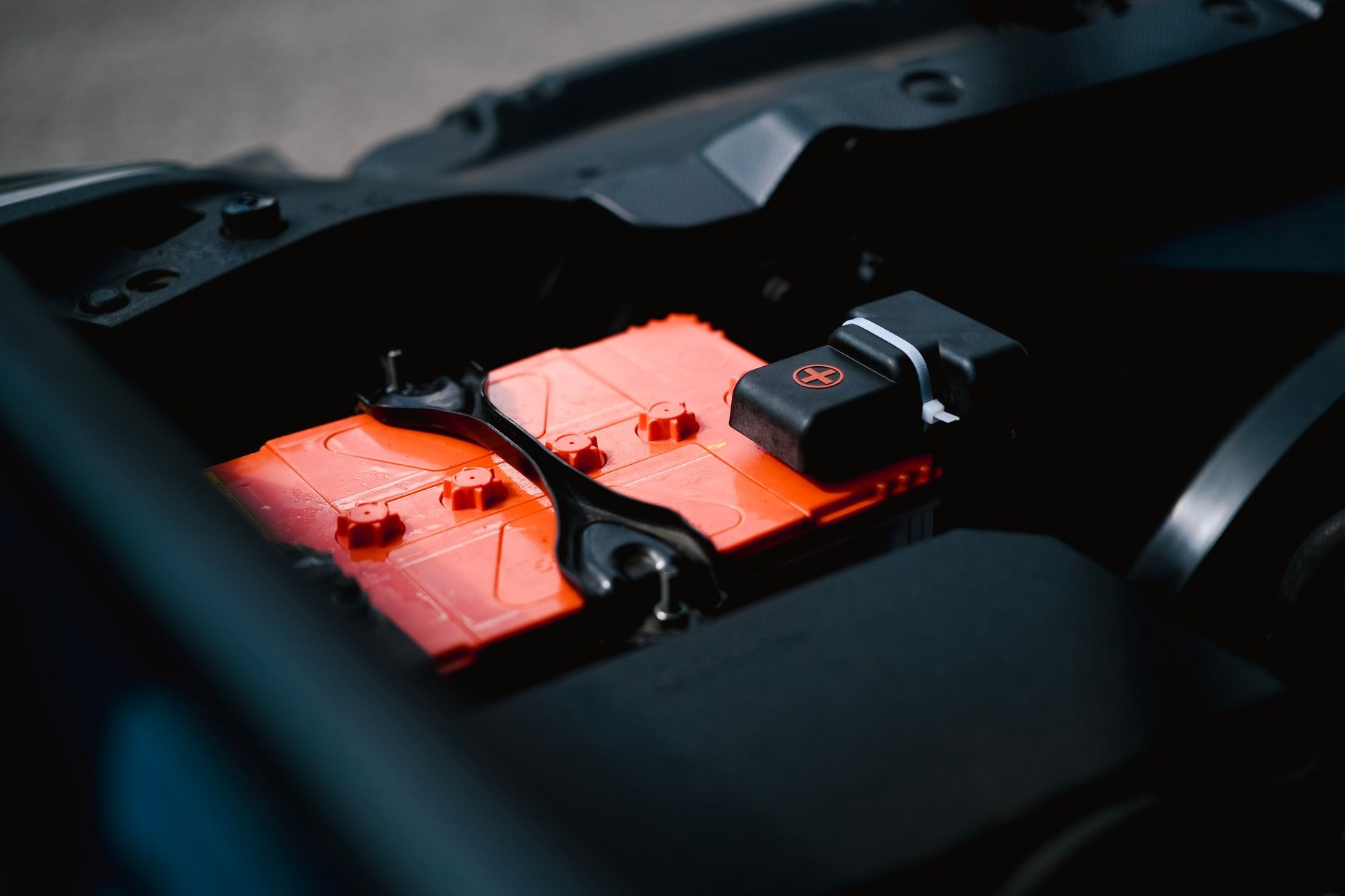
An electric vehicle has no oil to change, no spark plugs and no exhaust system, yet it still needs skilled people to diagnose faults, maintain systems and repair damage. The skills are different from traditional mechanics, and the safety stakes are higher: an EV's battery pack operates at voltages that can kill. For technicians, electricians and engineering graduates willing to retrain properly, that combination of new technology and specialist knowledge is what makes EV work an interesting career path.
This article explains what is different about EVs, what high-voltage safety involves, which skills employers look for, and how to build a sensible training path.
How an EV Differs from a Petrol Car
A petrol or diesel car converts fuel into motion through hundreds of moving parts: pistons, valves, a fuel system, a gearbox with multiple ratios, and an exhaust. A battery electric vehicle replaces most of that with a small number of high-power electrical systems. Understanding these is the foundation of every EV job.
The high-voltage battery pack
The battery pack stores energy in many lithium-ion cells grouped into modules. Pack voltages in cars are commonly in the region of 400 volts, and some newer platforms use around 800 volts. Electric motorcycles and three-wheelers generally use lower-voltage packs, but those can still deliver dangerous currents and store a lot of energy. The pack also includes cooling, structural protection, fuses, contactors (heavy-duty switches) and sensors.
The battery management system (BMS)
The BMS is the pack's control electronics. It monitors cell voltages and temperatures, balances cells, estimates state of charge and state of health, and opens the contactors if something goes wrong. Many EV faults show up first as BMS warnings, so reading and interpreting BMS data is a core diagnostic skill.
The inverter and electric motor
The battery supplies direct current (DC), but most traction motors run on alternating current (AC). The inverter converts DC to three-phase AC and controls motor speed and torque. During regenerative braking the process runs in reverse: the motor acts as a generator and the inverter sends energy back to the battery. Common motor types include permanent magnet synchronous motors and induction motors.
Charging and the 12-volt system
When an EV charges from an AC source, such as a home wall box, the on-board charger converts AC to DC for the battery. DC fast chargers bypass the on-board charger and supply DC to the battery directly, under the control of the vehicle. A DC-DC converter steps the high voltage down to run the conventional 12-volt system for lights, infotainment and control units. A flat 12-volt battery can stop an EV from starting, just like a petrol car.
Thermal management
Batteries, motors and power electronics all generate heat and perform best within a temperature range. EVs use liquid cooling loops, heat pumps or air systems. In hot climates such as southern Pakistan and the Gulf, thermal management is especially important for battery life and charging performance.
High-Voltage Safety: Non-Negotiable Basics
This section is an overview for awareness only. It is not a substitute for formal training. No one should work on or near an EV's high-voltage system without proper training, authorisation from their employer and the correct personal protective equipment. Always follow the vehicle manufacturer's service procedures.
Key principles that trained technicians follow include:
- Recognise high-voltage components. High-voltage cables in road vehicles are conventionally orange, and components carry warning labels. Treat anything orange or labelled as live until proven otherwise.
- Follow a safe isolation procedure. This typically involves switching off the vehicle, securing the key, disconnecting the 12-volt supply and removing the service disconnect as described by the manufacturer, then waiting the specified time for capacitors in the system to discharge.
- Verify absence of voltage. Use a suitably rated meter and test leads, check the meter on a known source before and after the test, and test at the points the manufacturer specifies.
- Use the right PPE and tools. Insulated gloves rated for the voltage (inspected before each use, often with leather protectors), eye and face protection, and insulated tools rated for high-voltage work.
- Control the work area. Barriers and signs to keep untrained people away, a non-conductive mat where required, and a lockout procedure so the system cannot be re-energised.
- Never work alone on live or isolated HV systems. A trained colleague should be nearby, with a rescue hook and a plan for emergencies.
- Respect damaged batteries. A battery that has been in a crash, flood or fire can be unstable and can re-ignite. Damaged packs require specialist handling, storage and transport.
Electrical hazards are only one part of workshop safety. Lifting heavy battery packs, chemical exposure and fire risk all need to be assessed. Our guide to workplace hazard identification and risk assessment explains how to evaluate these risks, and broader HSE training such as the OSHA-30 HSE training bootcamp gives a strong grounding in workplace safety systems.
Skills Employers Look For
EV technician roles combine mechanical, electrical and digital skills. A useful way to think about them is in four groups.
Electrical and electronic fundamentals
- Ohm's law, series and parallel circuits, AC vs DC
- Reading wiring diagrams and schematics
- Using a multimeter, insulation tester and oscilloscope correctly
- Understanding relays, fuses, sensors, semiconductors and basic digital logic
If these concepts are new, start with a foundation course such as Introduction to Electronics, Electrical and Digital Circuits before moving on to vehicle-specific training.
Diagnostics
- Using scan tools to read fault codes and live data from the BMS, inverter and charging systems
- Following a logical diagnostic process: verify the complaint, gather data, form a hypothesis, test, repair and confirm
- Understanding vehicle networks such as CAN bus, where control modules communicate
- Diagnosing charging faults, which may involve the vehicle, the cable or the charging equipment
Mechanical skills that still matter
EVs still have suspension, steering, brakes, tyres, bearings, air conditioning and body panels. EVs are heavy, and regenerative braking changes how friction brakes wear, so brake and tyre service remains important. A good EV technician is still a good all-round technician.
Professional skills
- Following written procedures precisely and documenting every step
- Explaining faults and costs clearly to customers
- Keeping up with software updates and new models, since EV technology changes quickly
Career Opportunities
As more electric vehicles enter the market, demand for people who can service them grows with them. Opportunities include:
- Dealership and authorised service technicians trained on specific brands
- Independent workshop technicians, as EVs age out of warranty and owners look for alternatives
- Battery specialists working on diagnostics, module repair or second-life applications
- Charging infrastructure technicians who install and maintain chargers, which usually also requires an electrician's qualification
- Fleet maintenance for electric buses, delivery vans, ride-hailing fleets and electric motorcycles
- Two- and three-wheeler EV service, which is particularly relevant in Pakistan and South Asia, where motorcycles and rickshaws are central to daily transport
In Pakistan, the government has introduced policies to encourage electric vehicles, and several brands are selling or assembling EVs locally. Gulf countries are also investing in EV adoption and charging networks. Adoption rates and incentives change, so research the current market in your city or target country rather than relying on forecasts.
A Practical Training Path
There is no single global licence for EV technicians, and requirements vary by country and employer. In many markets, recognised high-voltage qualifications are organised in levels, from awareness for people who work around EVs to advanced levels for those who diagnose and repair live systems. A sensible progression looks like this:
- Build electrical and electronic fundamentals. Circuits, measurement and component basics, ideally with hands-on practice on low-voltage training boards.
- Learn general automotive and workshop safety. Lifting, tools, chemicals, fire safety and risk assessment.
- Complete structured EV technology training. Battery systems, BMS, inverters, motors, charging, thermal management and diagnostics. The Electric Vehicle Technician Bootcamp covers this core EV technology.
- Get supervised hands-on experience. Practical skills on high-voltage systems must be developed under qualified supervision, in a properly equipped workshop, using manufacturer procedures.
- Obtain recognised high-voltage certification appropriate to your country and employer, and any manufacturer-specific training required for the brands you service.
- Keep learning. New battery chemistries, higher-voltage platforms and software-defined vehicles mean the job keeps evolving. Driver-assistance features increasingly rely on AI, so a basic grasp of what artificial intelligence is and how it works is a useful addition to your toolkit.
Online courses are an efficient way to learn the theory, terminology and diagnostic logic. They do not by themselves authorise anyone to work on high-voltage systems; that requires practical, assessed training and authorisation from your employer.
Frequently Asked Questions
Do I need to be a qualified mechanic before training as an EV technician?
Not always, but a background in automotive work or electrical trades makes the transition much easier. Many EV technicians start as conventional technicians and add high-voltage qualifications.
Is working on EVs more dangerous than working on petrol cars?
The hazards are different. High-voltage systems can cause fatal electric shock and arc flash, and damaged batteries can catch fire. With proper training, isolation procedures and PPE, the work is carried out safely every day; without them, it is dangerous.
Can I repair an EV battery pack myself?
Battery pack repair should only be carried out by trained, authorised technicians with the correct equipment and procedures. Do not open a battery pack without that training.
Will EVs need less maintenance, and does that mean fewer jobs?
EVs have fewer routine service items than petrol cars, but they still need tyres, brakes, suspension, cooling system and software attention, plus specialist diagnostics and repair. Technicians with high-voltage skills are likely to be in demand as EV numbers grow.
What should I learn first?
Start with electrical and electronic fundamentals. Without a solid grasp of voltage, current, resistance and measurement, EV systems are very hard to understand or diagnose.
Next Steps
If you are considering EV work, begin with the fundamentals and a strong safety mindset, then move to dedicated EV technology training. The Electric Vehicle Technician Bootcamp is a structured way to learn how EV batteries, motors, power electronics and charging systems work, and it pairs well with supervised practical training and certification in your region.